“History has remembered the kings and warriors, because they destroyed; art has remembered the people because they created.”
William Morris
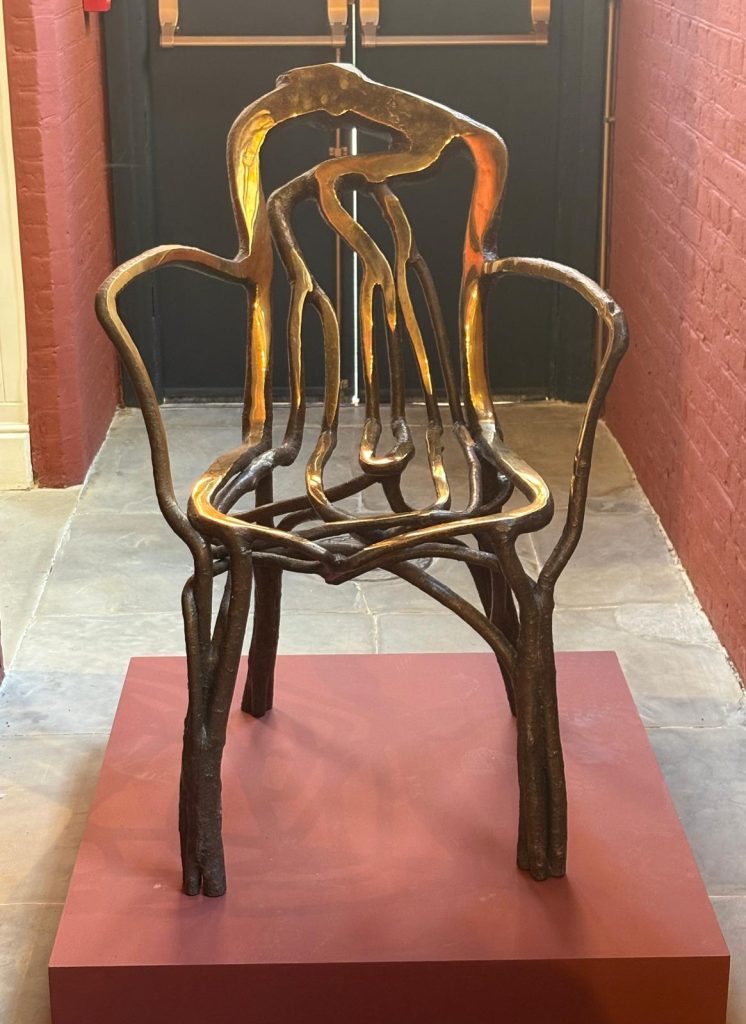
Chair from Perch, Sarah Myerscough Gallery.
Two recent visits to exhibitions prompted me to think about human creativity. In particular, about art and craft, and how they bleed into each other.
At their essence, both visits showed how critical the human hand is in making manifest the power of imagination and creativity. They also made me think about how intrinsic creativity is to being alive, and that creativity will out, no matter what adversity faces us.
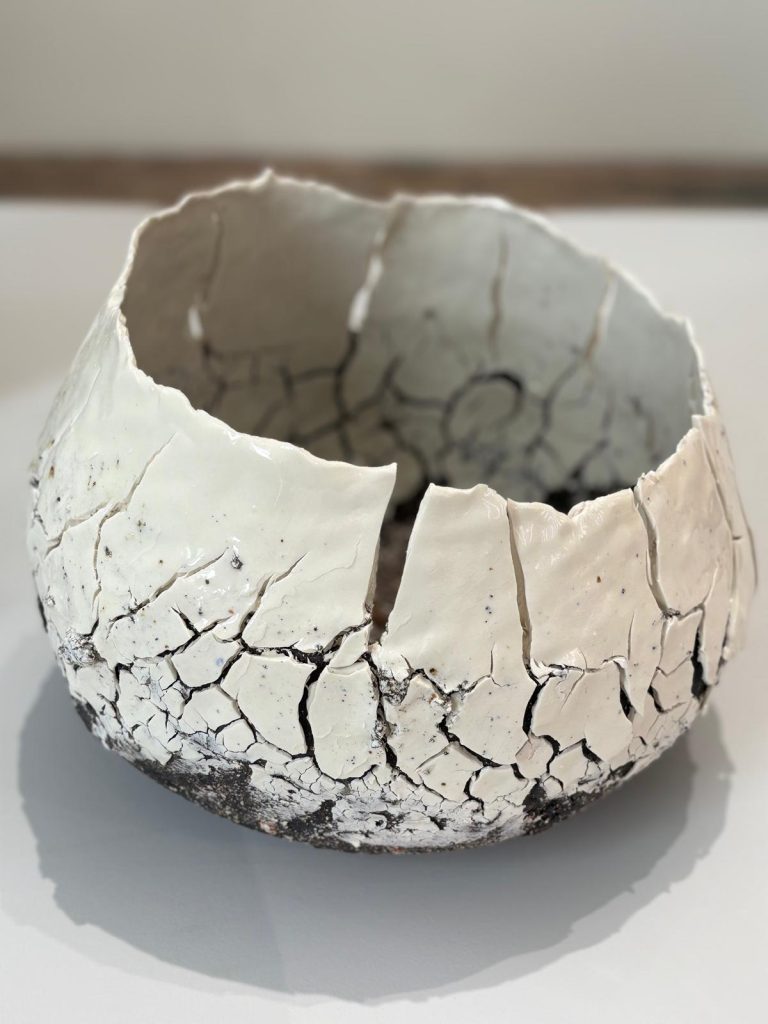
Work by Aneta Regel from Beneath the Skin, Sarah Myerscough Gallery.
The Sarah Myerscough Gallery, just off Oxford Street, is a wonderful series of spaces set over several floors, allowing for parallel exhibitions. These exhibitions demonstrate the power of artisanship while focusing on different materials and challenging our notions of how materials are used, and the relationship between materials and the artefacts being created and depicted.
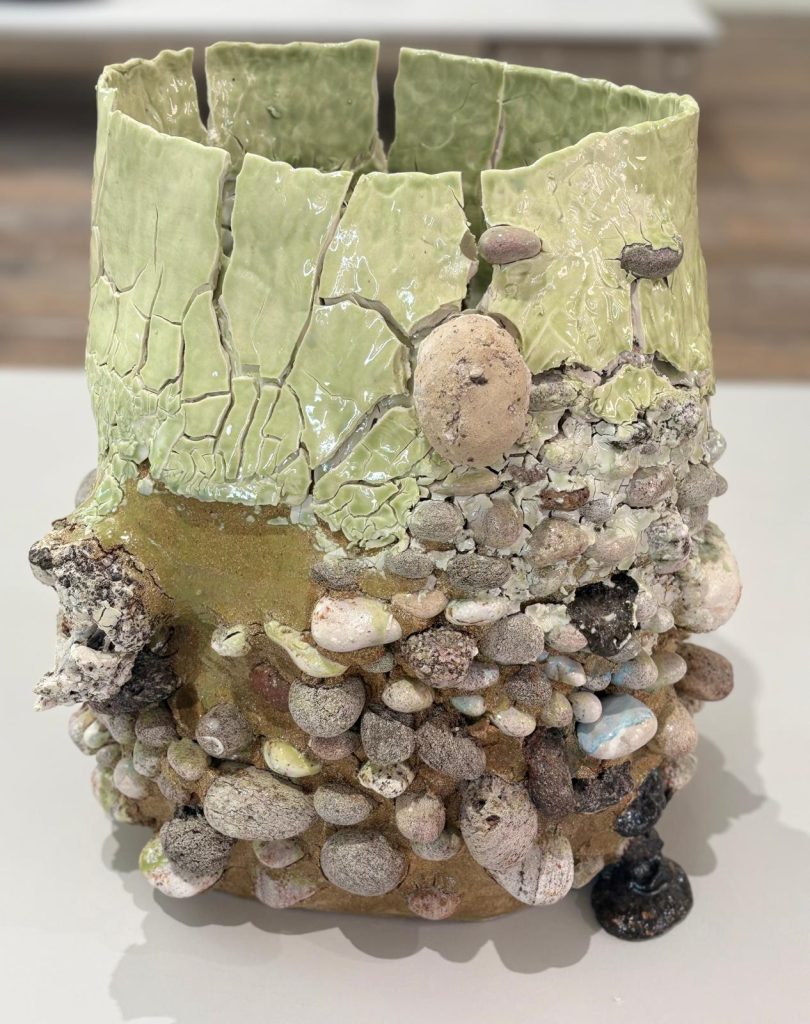
Work by Aneta Regel from Beneath the Skin, Sarah Myerscough Gallery.
There is a clear human dimension to the objects being curated and exhibited, whether it is the chairs in Perch, or the ceramics in Beneath the Skin, where Aneta Regel pushes the concept of a vessel to its limits.
These exhibitions made me extend my thinking about the notion of beauty in the everyday objects we surround ourselves with and use. They also raised questions in my mind about why we, as humans, decorate and push the materiality of objects when, in the end, there is no practical need to do so. Similarly, why do we push the definition and purpose of an object beyond the normal convention?
These exhibitions show and explore the relationship of objects to our bodies: how we relate to them, how their physicality makes us question our weight, shape and strength. They make us reflect on materials, layers of materiality, and the mass and structure of objects.
It was my visit to Sarah Myerscough Gallery that prompted me to visit the Pitt Rivers Museum again, where there is a clear resonance between art, craft and creation.
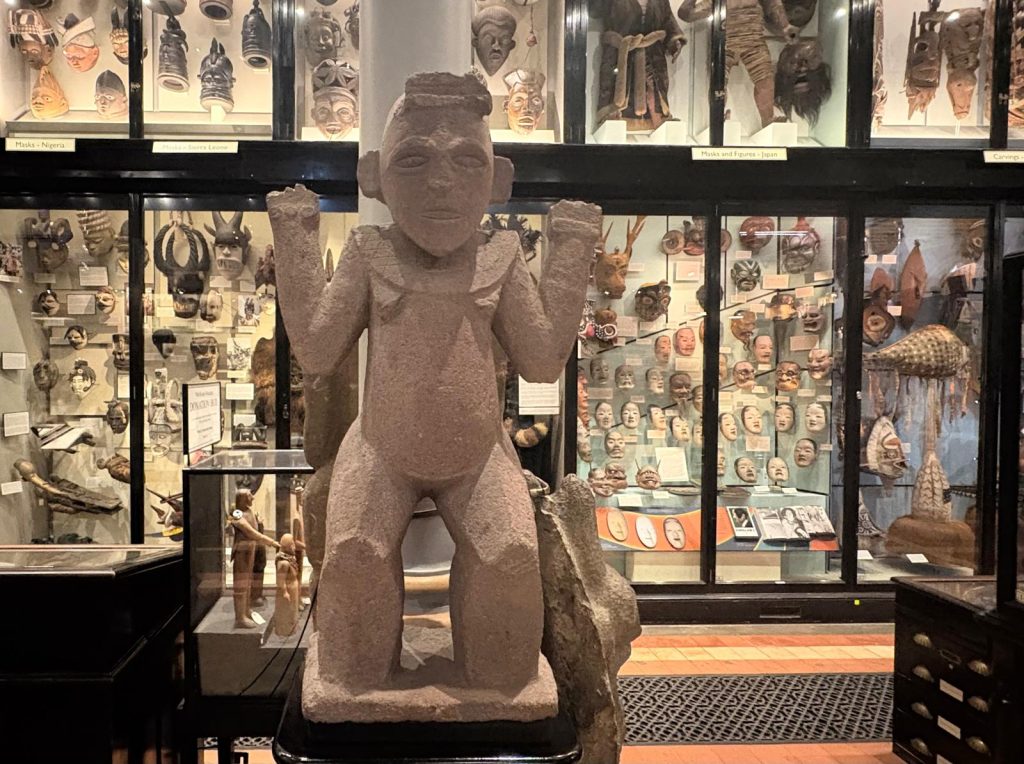
Pitt Rivers Museum: Collection of West and Central African masks carved for ritual performance and community ceremony; modern silver votive offerings from Athens shaped as symbolic figures and body parts used in devotional practice
The work there demonstrates our ability to make art out of everyday tools, household objects and even our own bodies. It shows how, as creatives, we push the idea that everything can be rethought through the act of making, so that at times making art and craft can become synonymous.
The global focus on creativity and human making at the Pitt Rivers, and the skills and creativity across continents and cultures, is extraordinary to experience and at times overwhelming. Everywhere, as at Sarah Myerscough, structures, materials, the human interface and how we physically inter-relate with creative objects is inspiring and life-affirming.
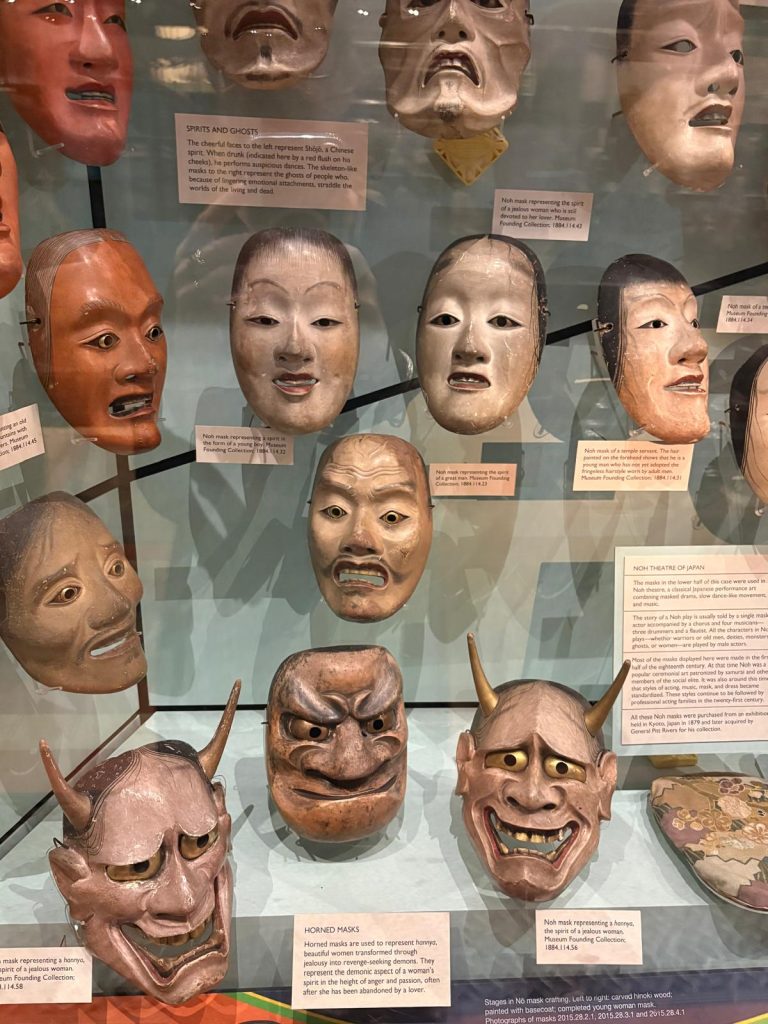
Pitt Rivers Museum: Japanese Noh theatre masks depicting spirits, ghosts, and intense emotional states from Japan’s classical performance tradition
As someone who is not an anthropologist, sociologist or museologist, I respond to my visits to exhibitions as someone deeply interested in the creativity, intellectual engagement and aesthetics on display.
How ideas are explored and pushed, and the way curiosity about the why and how is raised, is at the heart of my commitment to museums and exhibitions.
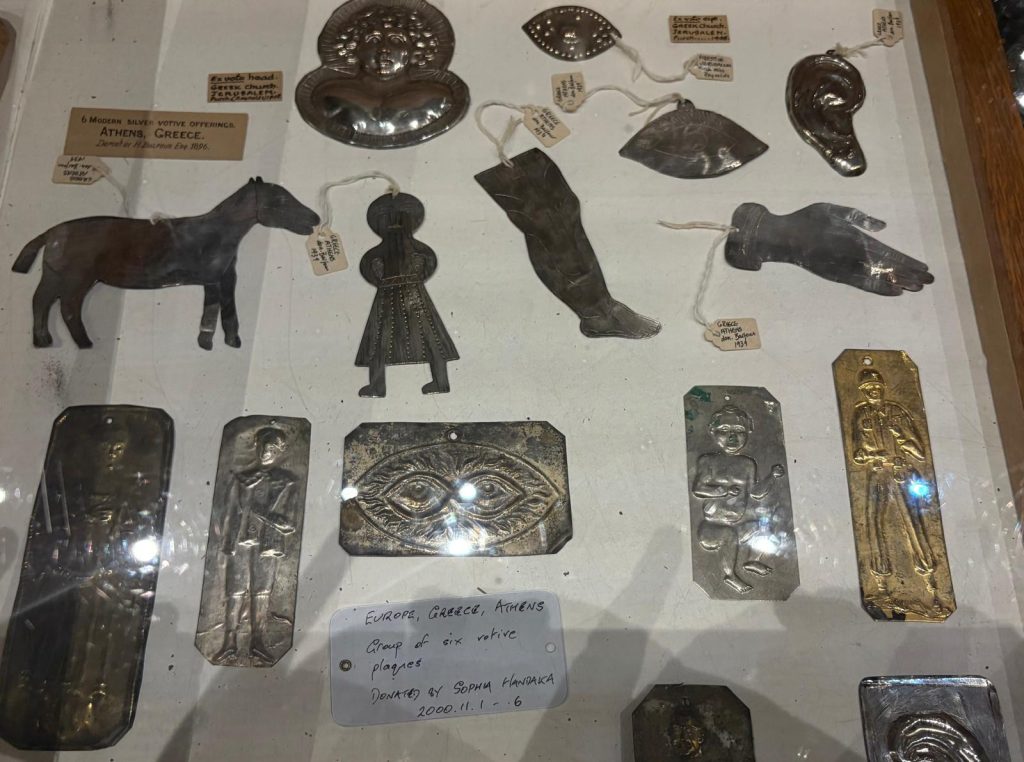
Pitt Rivers Museum: Modern silver votive offerings from Athens shaped as symbolic figures and body parts used in devotional practice
How they inform us all as creative beings, inspiring us, making us want to create, making us want to understand and investigate the motivations behind the artist or artisan, and making us think about how they reflect the society and culture in which they are created:
These are the reasons why museums and galleries are so integral to us as humans.